Middle East
Humanitarian
Appeal
Middle East
Humanitarian Appeal
Conflict in the Middle East has devastated lives. Millions of people in Gaza, Lebanon, the West Bank and Syria urgently need shelter, food and basic supplies. Save lives. Donate now.
Aaliyah* holds her daughter on the remains of a damaged building in Gaza in October 2024. The mother of six built a temporary shelter opposite her demolished house and depends entirely on aid to feed her family. Photo: DEC/Arete/Abdallah Alsayed

Inside the operating theatre with surgeon Dr Ando, nurse Haitam, and anesthetist Dr Hamish where a nerve repair is being done at the DEC-funded Red Cross Rafah Field Hospital in Gaza on 21 June, 2025. Image: Sarah Davies/ICRC/British Red Cross

The scale of need is overwhelming

2.1 million
people facing extreme food shortages with famine confirmed across Gaza City

1.9 million
people displaced in Gaza, and tens of thousands more in Lebanon
Gaza response: October '24 to April '25
Much of this work was made possible by the increase in aid delivered during the ceasefire agreement earlier this year, but the situation has deteriorated rapidly. A full-scale blockade on supplies entering Gaza for many weeks had a devastating impact on the work of DEC charities and their local partners, and many are no longer able to deliver lifesaving food, water and medicine.
The humanitarian needs are growing by the day. Increased and safe access for aid is urgently needed to save lives.

440,000

420,000

109,000

22,000
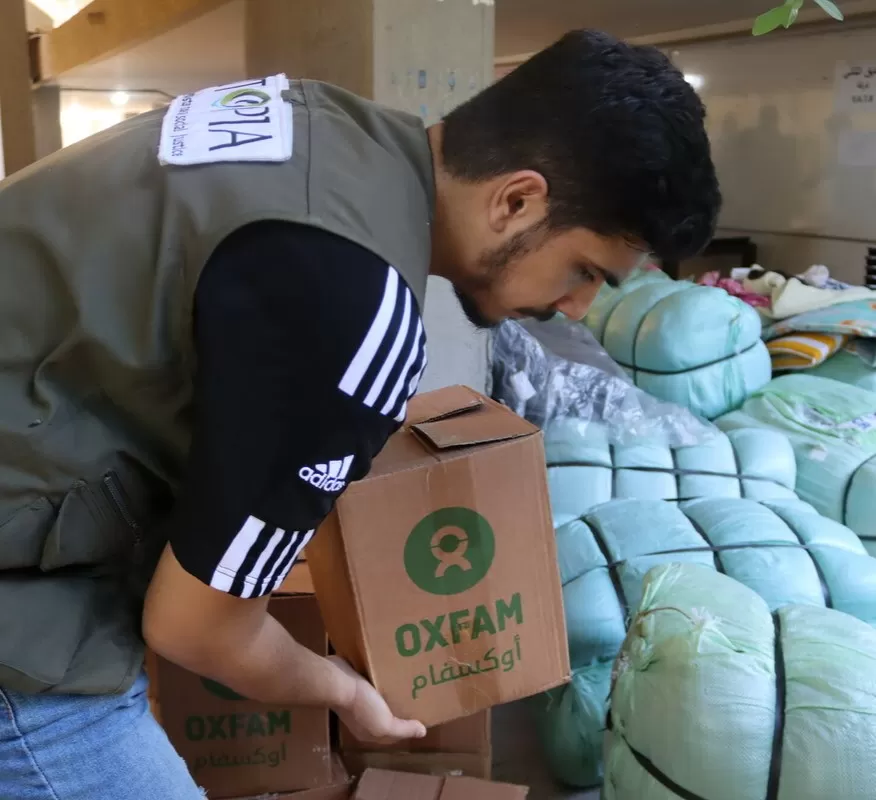
Mohammad, an aid worker from Oxfam’s local partner in north Lebanon distributes hygiene kits to displaced people at a collective shelter. Photo: Fatima Ghemrawi/Utopia for Social Justice/Oxfam
Where DEC charities are responding
Conflict in the Middle East has devastated lives across the region, and millions have fled their homes in search of safety.
DEC charities are responding in Gaza, Lebanon, the West Bank and Syria to meet urgent needs. They are constantly working with their local partners to navigate the challenges in delivering vital aid. Read more about where and how our charities are responding.
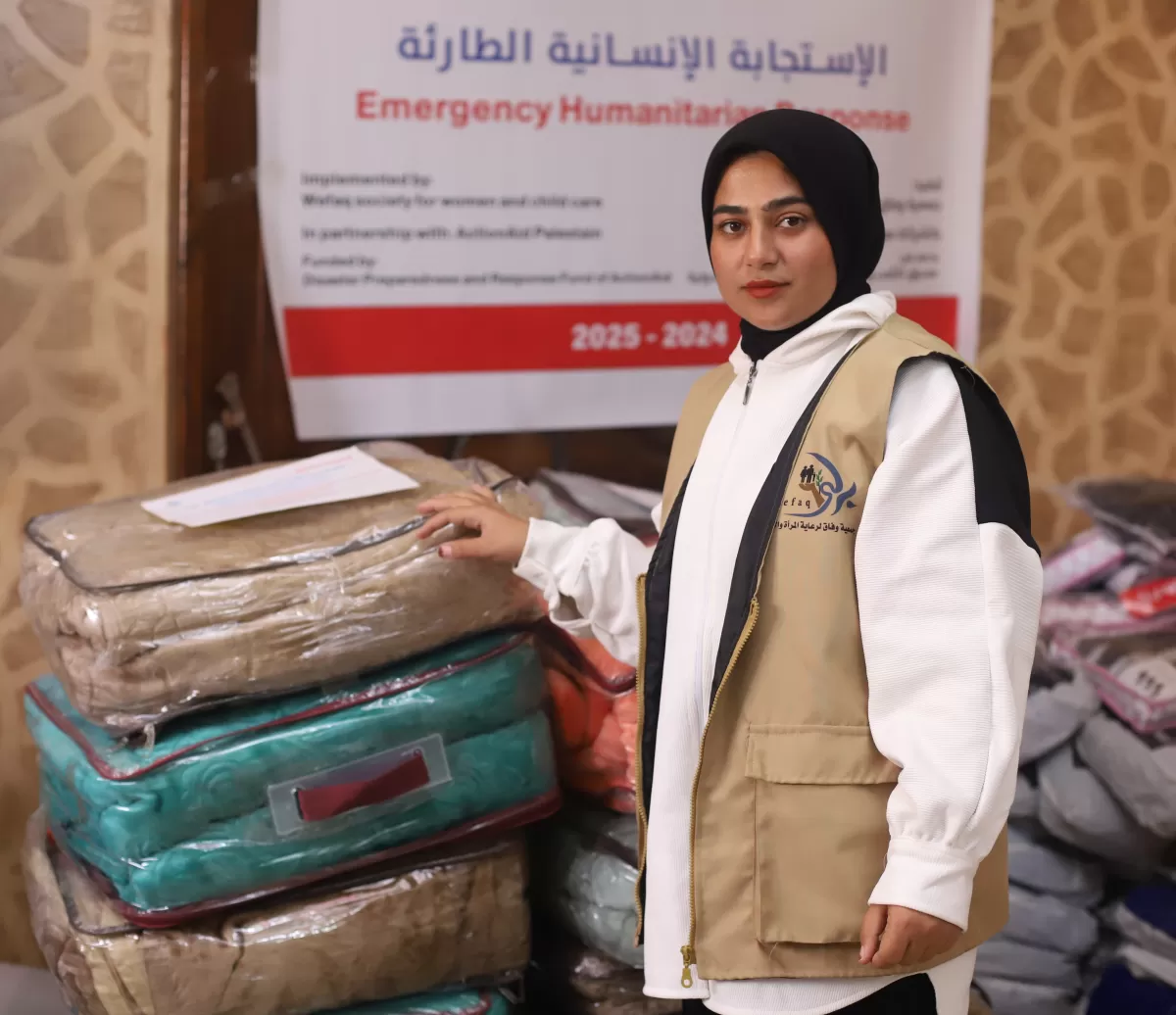
Salam, a volunteer with Wefaq organisation in Gaza and partner of DEC charity ActionAid, Feb 2025. Image: Wattan Media Network/ActionAid
How DEC charities are providing aid as the crisis evolves
Throughout the crisis DEC charities have been working hard to cope with limited deliveries of aid. Famine has now been confirmed in Gaza for the first time.
As they have done throughout the crisis, DEC charities and their local partners are working tirelessly to meet some basic needs in the ways they are still able to.
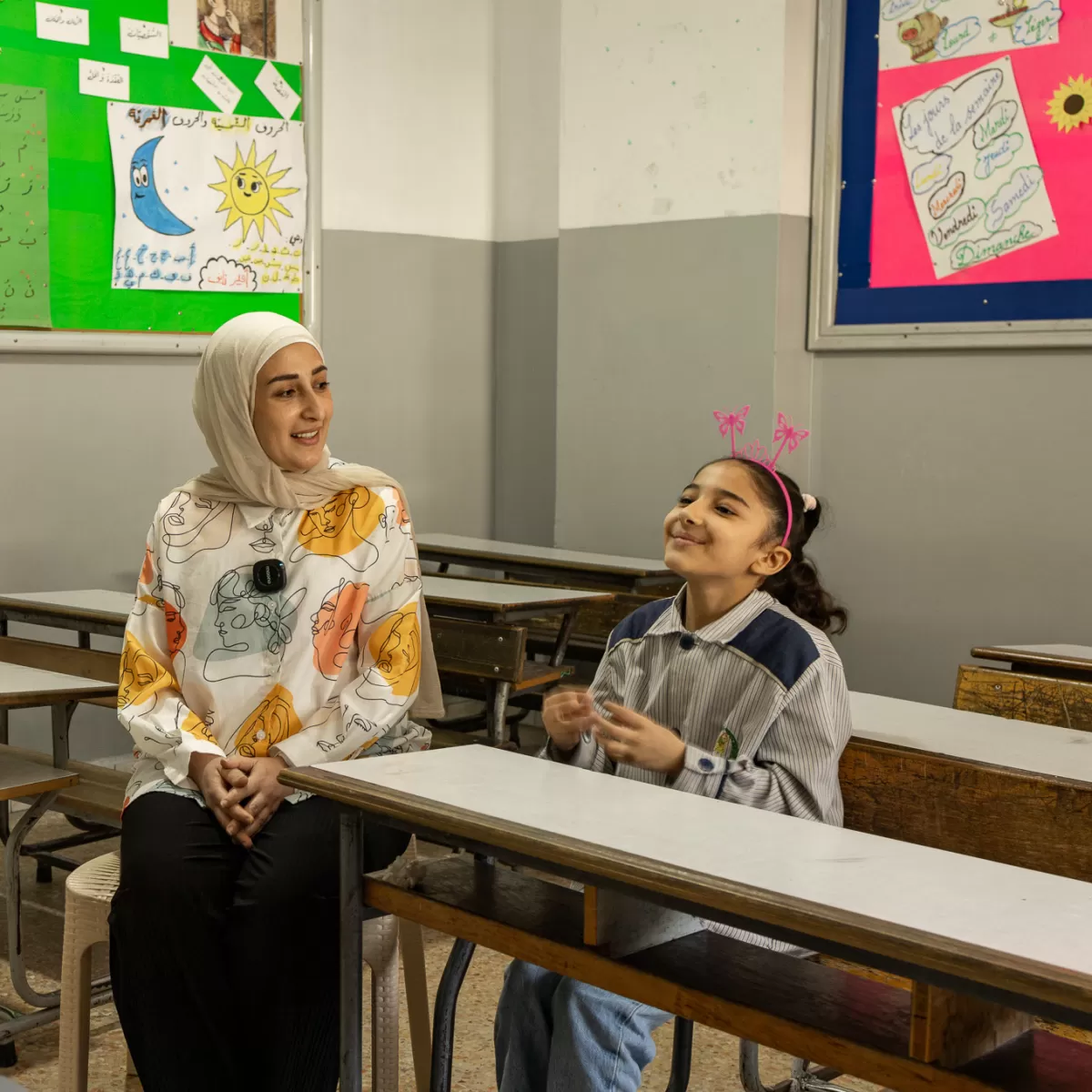
Maryam sits with her seven year old daughter Zahraa after taking part in psychological support activities, May 2025. Image: Carmen Yahchouchi / DEC / Fairpicture
Local expertise helps meet urgent needs in Lebanon
The ceasefire agreement in Lebanon at the end of last year meant some of the hundreds of thousands of people displaced by conflict could return to their communities and start to rebuild their lives.
Find out more about how DEC charities have been working with local partners in Lebanon, to provide families with essential support to meet their needs.

Actors Riz Ahmed, Joe Alwyn and Ruth Negga join the call for urgent donations to help provide lifesaving aid in Gaza, Lebanon and the wider region.

Appeal News
The latest news from the situation in the Middle East.
Jump to
Middle East Humanitarian Appeal raises over £50 million thanks to generous UK donations
9 September 2025
Middle East Humanitarian Appeal has now raised over £50 million thanks to the amazing generosity of the UK public.
The majority of appeal funds spent so far have supported programmes in Gaza, where the catastrophic humanitarian crisis continues to deteriorate.
Donations to the Middle East Humanitarian Appeal are helping to provide emergency medical care for the many sick and injured, clean water, cash assistance and more.
Despite severe challenges delivering aid, DEC charities and their dedicated local partners are doing everything they can to continue providing some support in these unimaginable conditions.
DEC Publish Middle East Humanitarian Appeal 6 Month Report
8 September 2025
The report covers the first six months of the response and explains how DEC member charities and their local partners have responded to the Middle East crisis using funds raised by the Middle East Humanitarian Appeal.
The report providing an overview and examples of what DEC funds have achieved working across Gaza, the West Bank, Lebanon, and Syria over the past 6 months of the response.
ITV: Famine confirmed in Gaza City for the first time
22 August 2025
Famine has been confirmed in Gaza for the first time. The global hunger monitor, the IPC, says that famine is now taking place across Gaza City and the surrounding areas, where more than 500,000 people are currently living.
They are warning it is set to spread further by the end of September unless food supplies are urgently increased.
The announcement marks only the 5th time in more than 20 years that the UN-backed Integrated Food Security Phase Classification (IPC) system has been used to confirm famine.
Gaza City and the surrounding areas have reached IPC Phase 5, which means more than 30% of children are acutely malnourished, and people are dying every day from hunger related causes.
Sky News: Why are airdrops on Gaza so dangerous?
29 July 2025
In this explainer, Sky News repot on how The United Nations has today condemned airdrops on Gaza, warning they risk killing the starving Palestinians they are intended to help.
As reported in the article, Philippe Lazzarini, commissioner-general for UNRWA, has said airdrops "will not reverse the deepening starvation" and often do more harm than good.
Adding that: "They are expensive, inefficient & can even kill starving civilians" in a statement posted on social media.