Two years into our five-year strategy, we have accelerated the delivery of the key strategic projects identified in our review. These projects will help us to better deliver against our core mission: to raise funds to save, protect, and rebuild the lives of people impacted by emergencies and major disasters overseas.
Throughout the lifecycle of a DEC appeal — from launch right through to when all the funds have been spent — we update supporters on the impact of their donations, from delivering lifesaving aid in the immediate aftermath of disaster to projects that help people recover and rebuild their lives and livelihoods.
To build trust with our supporters, our strategic priorities are:
- Investing in our existing and future audiences
- Mobilising a ‘whole appeal’ approach to engage
audiences - Reimagining our supporter experience
- Driving timely, impactful and authentic content
Investing in our existing and future audiences
This year we continued to gather support and strengthen our relationships with audiences in Scotland, Wales and Northern Ireland.
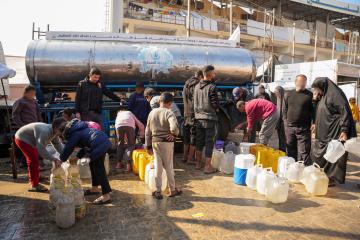
The Myanmar Earthquake Appeal has raised £2.4 million in Scotland at the time of publication. Engagement for the ongoing Middle East Humanitarian Appeal also continued throughout the year, which included an appearance at the Scottish Parliament’s External Affairs Committee, where DEC CEO Saleh Saeed and others presented to Members of the Scottish Parliament (MSPs) on how DEC charities and partners were supporting communities in Gaza, despite the significant logistical and security challenges. At the time of publication, the total raised in Scotland for this appeal is £5.6 million. The DEC also provided programme and communications support for the Scottish Government’s Humanitarian Emergency Fund.
The Myanmar Earthquake Appeal was marked in Wales with a photocall with DEC charities at the Senedd in Cardiff. They were joined by political representatives and members of the diaspora community. The Minister for Social Justice announced a £100,000 donation and appeal messages were broadcast across the main media channels. At the time of publication, the appeal had raised £1.5 million in Wales. Work also continued throughout the year on the DEC Middle East Humanitarian appeal, which at the time of publication had raised a total £4.1 million in Wales since its launch.
In Northern Ireland, the DEC brought together staff, members and representatives from the Ireland-Palestine Solidarity Campaign (IPSC), Friends of Palestine and Mothers Against Genocide to update Members of the Legislative Assembly (MLAs) at Stormont, on the DEC’s response in Gaza. At the time of publication, £800,000 million has been raised for the Myanmar Earthquake Appeal and £1.8 million for the Middle East Humanitarian Appeal in Northern Ireland, since their launch.
Mobilising a ‘whole appeal’ approach to engage audiences
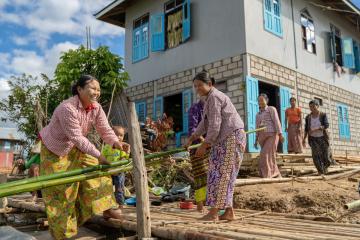
Some of our activities to report back to supporters on the impact of their donations included an outdoor photo exhibition and a digital campaign, one year on from the Myanmar Earthquake Appeal. After DEC-funded programmes ended for the Turkey-Syria Earthquake Appeal and the Ukraine Humanitarian Appeal, we commissioned documentaries that captured the stories of each appeal and their lasting impact on the DEC.
We are currently working with staff across the Secretariat to embed the whole appeal approach into reporting and are testing various marketing activations when there are spikes in media interest. This work will continue into the next financial year and throughout the rest of this strategic period.
Reimagining our supporter experience
Improving the experience we give to supporters — from donating to reporting back to them throughout the appeal — is key to building their trust and confidence in supporting future emergency responses. This year we embarked on a project to better understand who our supporters are, their motivations to donate to DEC appeals and their supporter experience. The project will continue to develop in the next financial year.
Driving timely, impactful and authentic content
Last year the DEC worked with sector experts from the University of Arts London to develop a methodology for contributor-centred storytelling that supports the co-creation of content with communities affected by disaster. In October 2025, we put the framework into practice by piloting a co-creation content workshop with a group of displaced women in Beirut, Lebanon. The women, who all received support at a community centre run by the local partner of a DEC member charity, directed and co-produced the content, shaping how their stories - and the impact of the DEC support - would be reported back to our audiences.