World
Humanitarian
Day
World
Humanitarian
Day
Aid workers run a mental health and psychological support session for children impacted by the conflict in Lebanon at a collective shelter for displaced families. Photo: Save the Children
In their own words
Humanitarians on the front line of humanitarian response share what their work means to the communities they serve, including in Gaza, where hundreds of aid workers have been killed and many continue to live and work in unimaginably harsh conditions, facing huge personal risks to help others.
"Every child has a story"
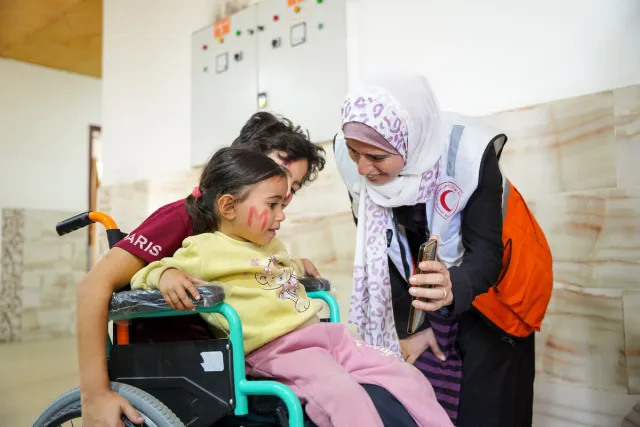
Dr Niveen is a mental health practitioner supporting children affected by the conflict in Gaza.
“Children have seen many things with their own eyes: bombing, destruction, displacement, and killing. Every child here has a story to tell, based on the psychological effects they witnessed during the war.
"We at the Palestine Red Crescent tried to create this safe space. Many children here love playing games. For a long time they hadn’t touched or played with toys. Perhaps the thing children express themselves with the most is through their drawings. We revive some painful emotions to replace them with feelings of happiness and joy."
The physical and emotional trauma for children who have witnessed war is immense but mental health practitioners like Dr Niveen are striving to help children express their thoughts and feelings and heal their invisible wounds.
"I've learned resilience"
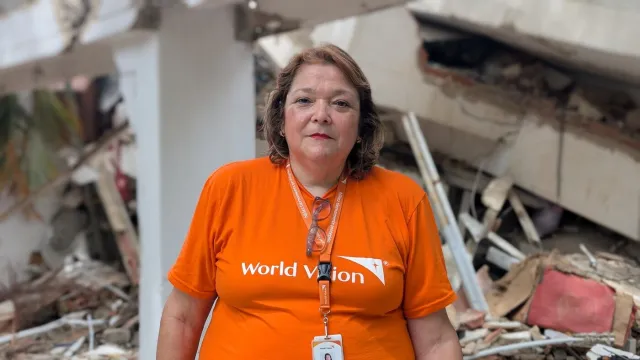
Claudia is an aid worker for DEC charity World Vision, supporting people affected by the earthquake in Venezuela.
“I have many friends and acquaintances who lost their lives. When the first deaths of people I loved dearly were confirmed, I wept, prayed, and pleaded for mercy. I had to set aside my anxiety and grief so I could be effective in my role.
“We began to implement a humanitarian response across the states most affected by the earthquakes and prioritise children, adolescents and their families.
“I’ve had to embrace the survivors and weep with those who lost everything. It’s going to be a very long road to help people recover both practically and psychologically. But I’ve learned resilience from the past.”
Donations to the Venezuela Earthquake Appeal are helping local aid workers like Claudia provide food, water and shelter to survivors.
"I felt called to this work"
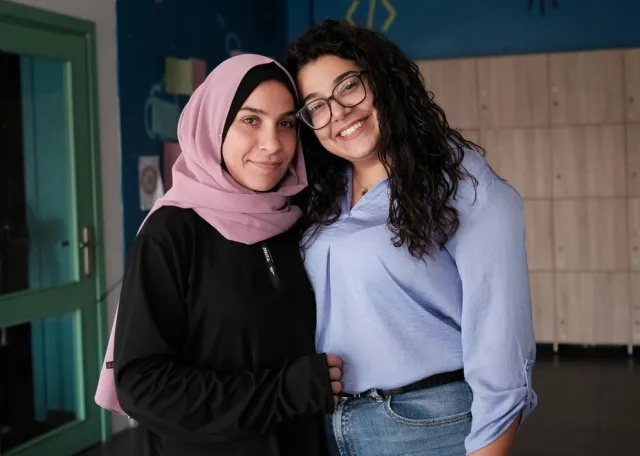
Rafce is a social worker in Lebanon providing support to families forced to flee their homes due to the conflict.
"I felt called to this work. I’ve always had a deep desire to stand beside children and families who are going through the hardest moments of their lives. I wanted to be part of a team that protects, supports, and gives hope.
“The most fulfilling moments are the small changes I witness; the smile of a child who starts feeling safe again, the relief in a mother’s voice when she realises she’s not alone, the progress a family makes step by step. These moments remind me why I do what I do. They give meaning to the long days and the emotional challenges."
Rafce works at a centre that provides displaced women like Abir with psychological support, daily meals, shower and laundry facilities and so much more.
"The pain is palpable"
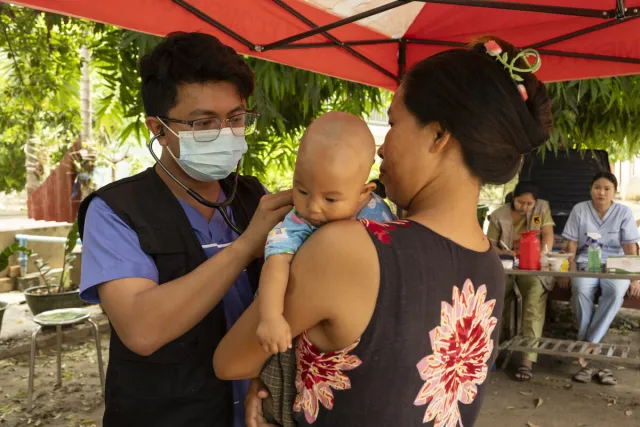
Dr Thura Nyi Nyi is part of a mobile medical team providing health services after the earthquake in Myanmar.
“Even as responders, we felt deep sadness seeing the devastation in person. As volunteers, we also felt aftershock fears.
“Nearly every survivor experiences some psychological impact, which inevitably affects physical health too.
“Patients primarily came for hypertension, diabetes, or physical injuries, [but] deeper questioning often revealed accompanying mental health issues. While some can articulate their pain openly, others simply weep uncontrollably. The grief manifests differently in each person, but the pain is equally palpable.”
After the earthquake, many patients could not access the medicine and healthcare they needed. Mobile health teams like Dr Thura Nyi Nyi’s are providing a lifeline thanks to donations to the DEC appeal.

60 years of lifesaving aid
The DEC has launched 80 appeals in response to some of the worst humanitarian disasters in the last 60 years and raised over £2.5 billion, thanks to the generosity of the UK public and the support of our broadcast and other partners.
Marking 60 years since the first appeal was broadcast on UK television, the DEC and the Royal Television Society host an event on 1 July 2026, coinciding with the launch of the DEC's 80th appeal - the Venezuela Earthquake Appeal. Photo: Andy Aitchison/DEC.